
Go back
Human resources management (HRM)
challenge
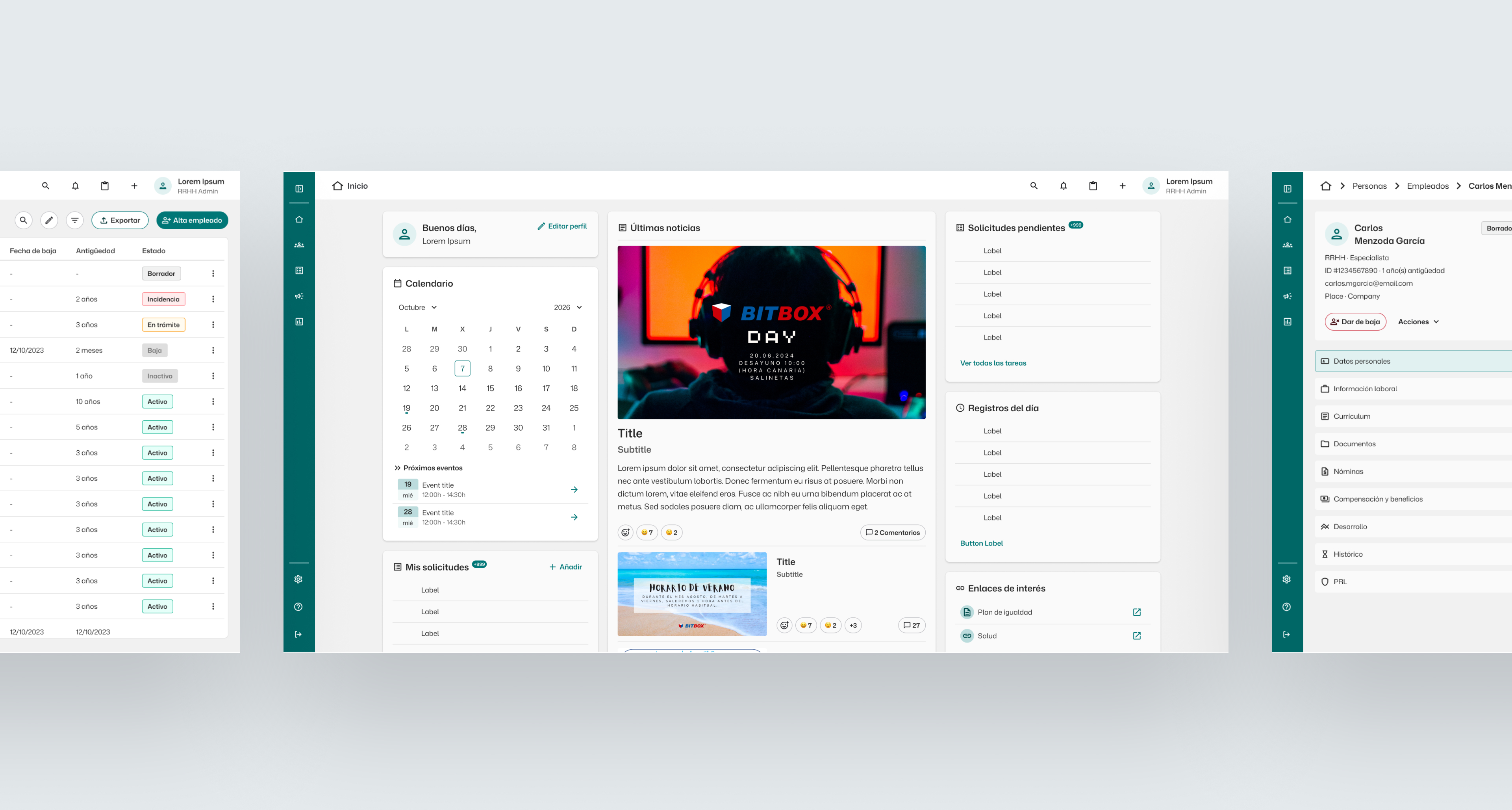
I worked on the initial definition of a new Human Resources Management module to centralize people management in a single HRM.
The product needed to bring together personal, employment, and organizational data, along with employee requests, documentation, and status. The challenge was especially complex because the same tool had to serve profiles with very different needs: HR administration, employees, managers, external advisors, and leadership.
role
I participated in the initial phase as a UX/UI & Product Designer, contributing to research, persona definition, benchmarking, and information architecture.
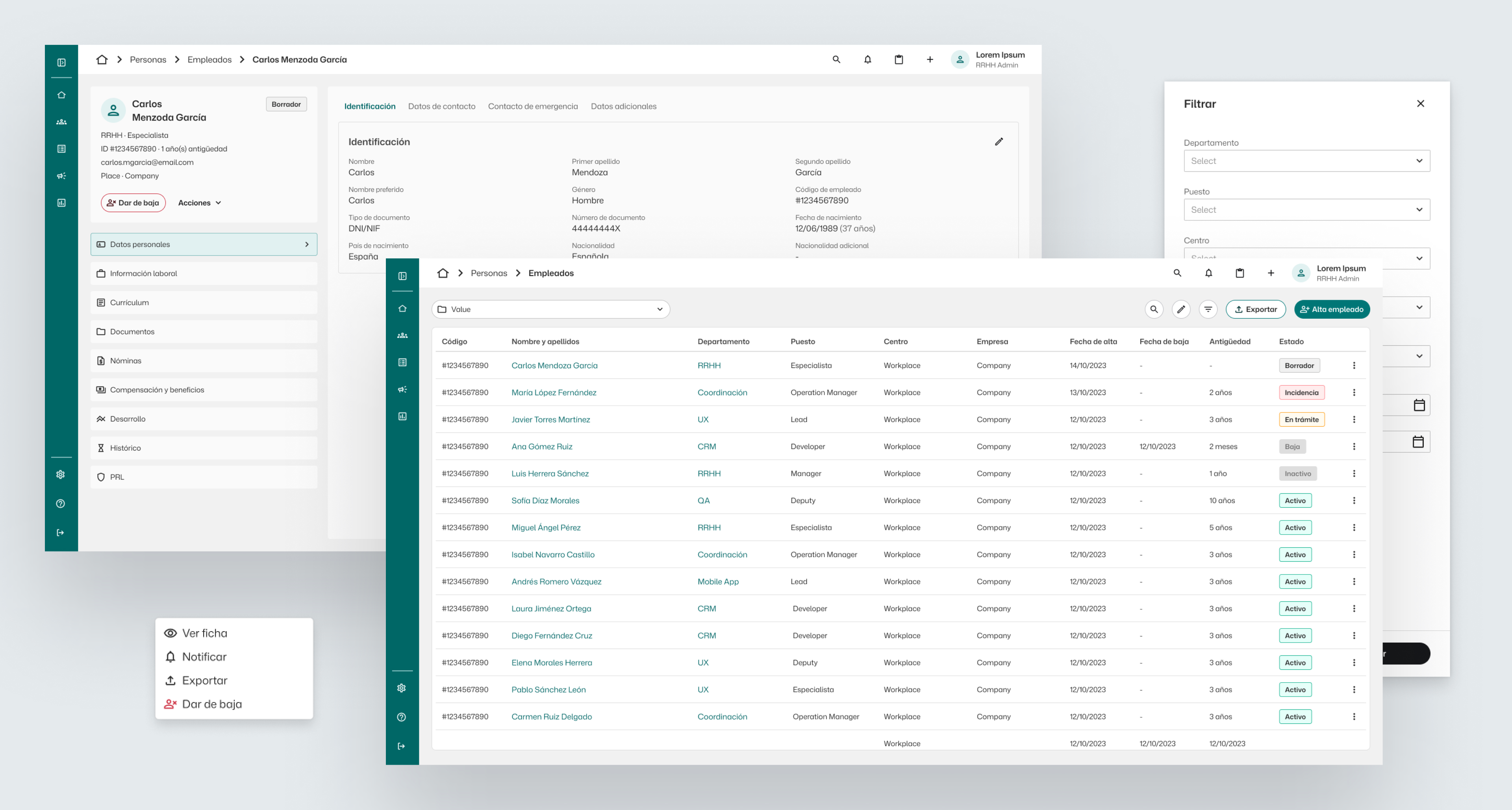
The scope focused on laying the foundations for the module and designing two key views: the People Management screen and the detail view for the HR administration profile.
process
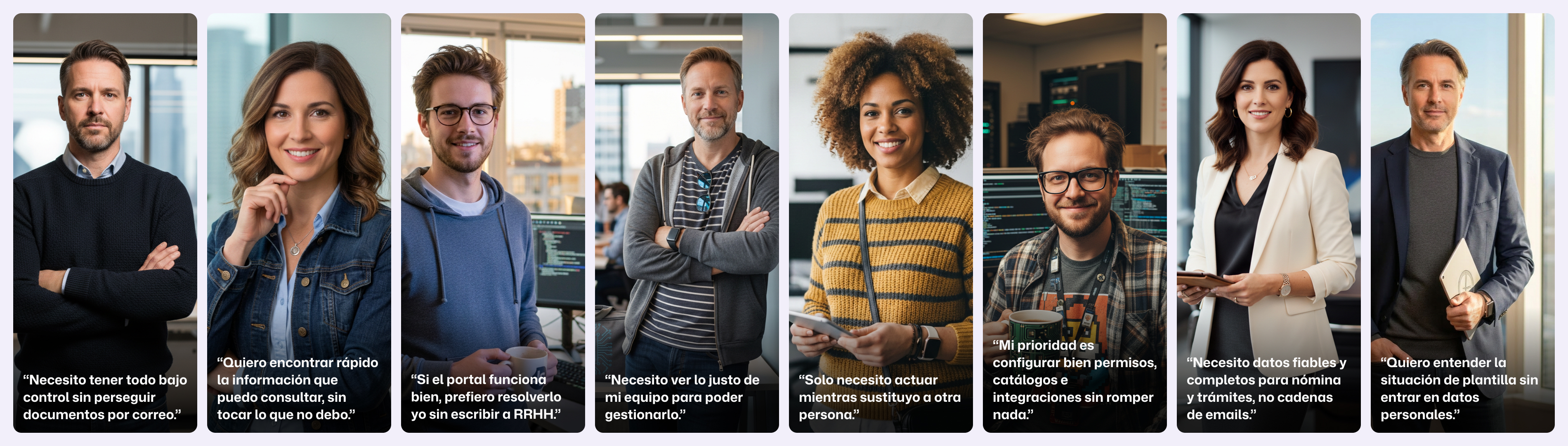
We reviewed the functional epics and created personas to understand what information and actions each profile needed.
We also analyzed products like Endalia and Bizneo to identify patterns for people management, permissions, profiles, statuses, and lists. The work centered on translating complex requirements into a clear information structure ready to scale.
key design decisions
- Information organized in blocks.The profile view was designed to show the most relevant data at a glance and allow users to dive deeper only when necessary.
- Permissions as part of the experience.We ensured that each profile could view and act only on the information needed for their work.
- Visible and understandable statuses.We defined statuses for employees and requests so that each person could understand what was happening and what actions were pending.
outcome & learnings
El trabajo dejó una base de producto para continuar con el desarrollo del módulo, conectando necesidades de usuario, permisos, estados y arquitectura de información.
Este proyecto reforzó la importancia de no diseñar un HRM como una única ficha llena de datos: la claridad depende de priorizar información, controlar el acceso y adaptar cada experiencia a la persona que la utiliza.
This project reinforced the importance of not designing an HRM as a single profile packed with data: clarity depends on prioritizing information, controlling access, and tailoring each experience to the person using it.
more projects

Go back
Human resources management (HRM)
challenge
I worked on the initial definition of a new Human Resources Management module to centralize people management in a single HRM.
The product needed to bring together personal, employment, and organizational data, along with employee requests, documentation, and status. The challenge was especially complex because the same tool had to serve profiles with very different needs: HR administration, employees, managers, external advisors, and leadership.
role
I participated in the initial phase as a UX/UI & Product Designer, contributing to research, persona definition, benchmarking, and information architecture.
The scope focused on laying the foundations for the module and designing two key views: the People Management screen and the detail view for the HR administration profile.
process
We reviewed the functional epics and created personas to understand what information and actions each profile needed.
We also analyzed products like Endalia and Bizneo to identify patterns for people management, permissions, profiles, statuses, and lists. The work centered on translating complex requirements into a clear information structure ready to scale.
key design decisions
- Information organized in blocks.The profile view was designed to show the most relevant data at a glance and allow users to dive deeper only when necessary.
- Permissions as part of the experience.We ensured that each profile could view and act only on the information needed for their work.
- Visible and understandable statuses.We defined statuses for employees and requests so that each person could understand what was happening and what actions were pending.
outcome & learnings
El trabajo dejó una base de producto para continuar con el desarrollo del módulo, conectando necesidades de usuario, permisos, estados y arquitectura de información.
Este proyecto reforzó la importancia de no diseñar un HRM como una única ficha llena de datos: la claridad depende de priorizar información, controlar el acceso y adaptar cada experiencia a la persona que la utiliza.
This project reinforced the importance of not designing an HRM as a single profile packed with data: clarity depends on prioritizing information, controlling access, and tailoring each experience to the person using it.
more projects

Go back
Human resources management (HRM)
challenge
I worked on the initial definition of a new Human Resources Management module to centralize people management in a single HRM.
The product needed to bring together personal, employment, and organizational data, along with employee requests, documentation, and status. The challenge was especially complex because the same tool had to serve profiles with very different needs: HR administration, employees, managers, external advisors, and leadership.
role
I participated in the initial phase as a UX/UI & Product Designer, contributing to research, persona definition, benchmarking, and information architecture.
The scope focused on laying the foundations for the module and designing two key views: the People Management screen and the detail view for the HR administration profile.
process
We reviewed the functional epics and created personas to understand what information and actions each profile needed.
We also analyzed products like Endalia and Bizneo to identify patterns for people management, permissions, profiles, statuses, and lists. The work centered on translating complex requirements into a clear information structure ready to scale.
key design decisions
- Information organized in blocks.The profile view was designed to show the most relevant data at a glance and allow users to dive deeper only when necessary.
- Permissions as part of the experience.We ensured that each profile could view and act only on the information needed for their work.
- Visible and understandable statuses.We defined statuses for employees and requests so that each person could understand what was happening and what actions were pending.
outcome & learnings
The work established a product foundation to continue developing the module, connecting user needs, permissions, statuses, and information architecture.
This project reinforced the importance of not designing an HRM as a single profile packed with data: clarity depends on prioritizing information, controlling access, and tailoring each experience to the person using it.
more projects