
Go back
CRM Marketing
challenge
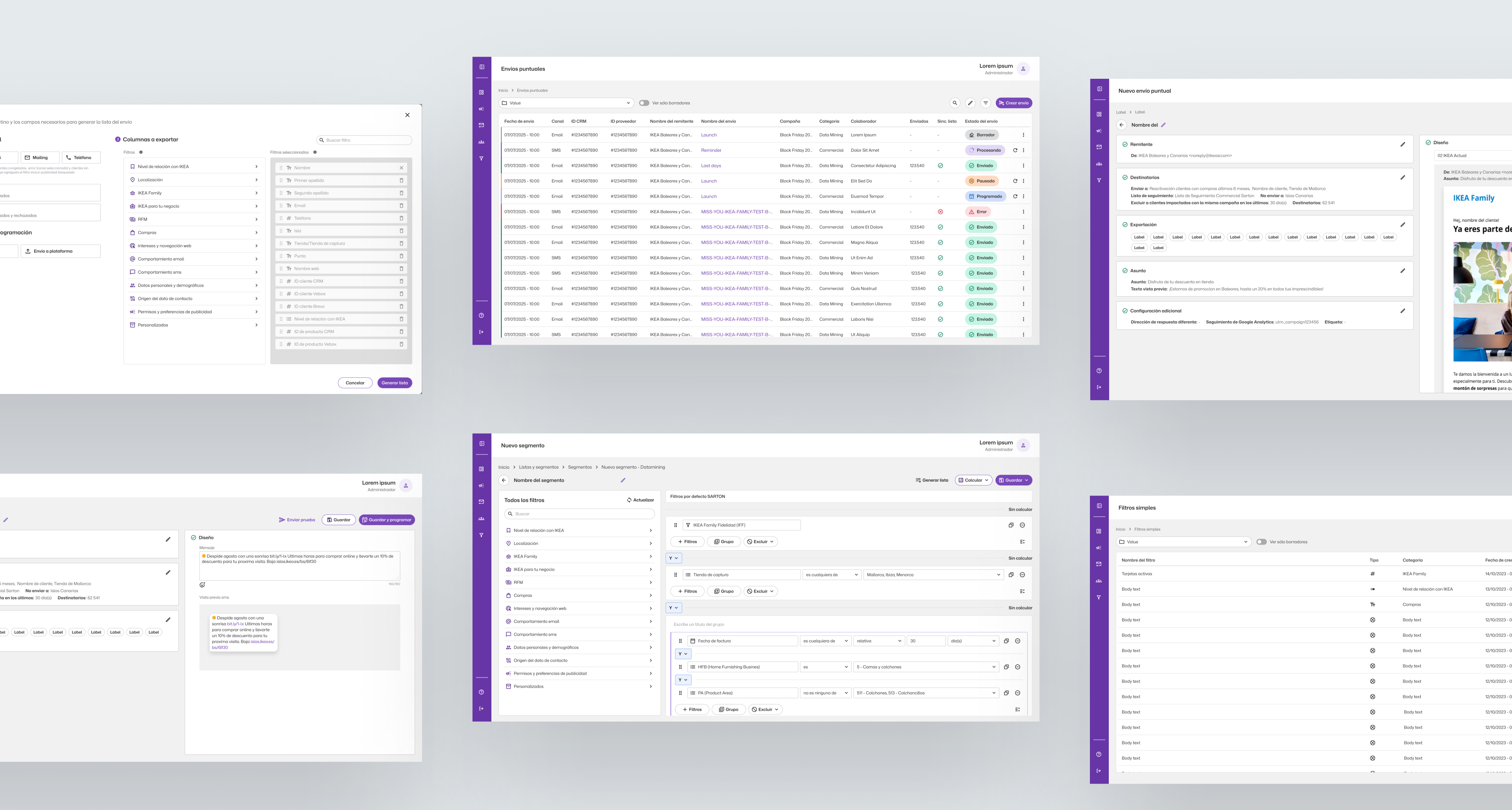
The existing segmenter hadn’t been updated in years. It was complex to learn, slow for certain actions, and didn’t always clearly show whether a process was loading, saved, or being applied correctly.
In addition, the team relied on Excel to manage specific data and calculations. The new CRM needed to centralize audience segmentation for campaigns and leave room for future metrics and reporting.
role
I participated as a Product Designer across the main phases: functional definition, benchmarking, flow and mockup design, iteration with stakeholders, and QA review.
I worked alongside another designer, stakeholders, and the CRM development team to balance business needs, user experience, and technical feasibility.
process
- We gathered requirements and validated the feasible functionalities for the first phase of the product.
- We analyzed patterns from tools like HubSpot and Salesforce to understand established segmentation logic.
- We designed and refined mockups with stakeholders and developers; in QA, we fixed issues and adapted components to API and database constraints.
key design decisions
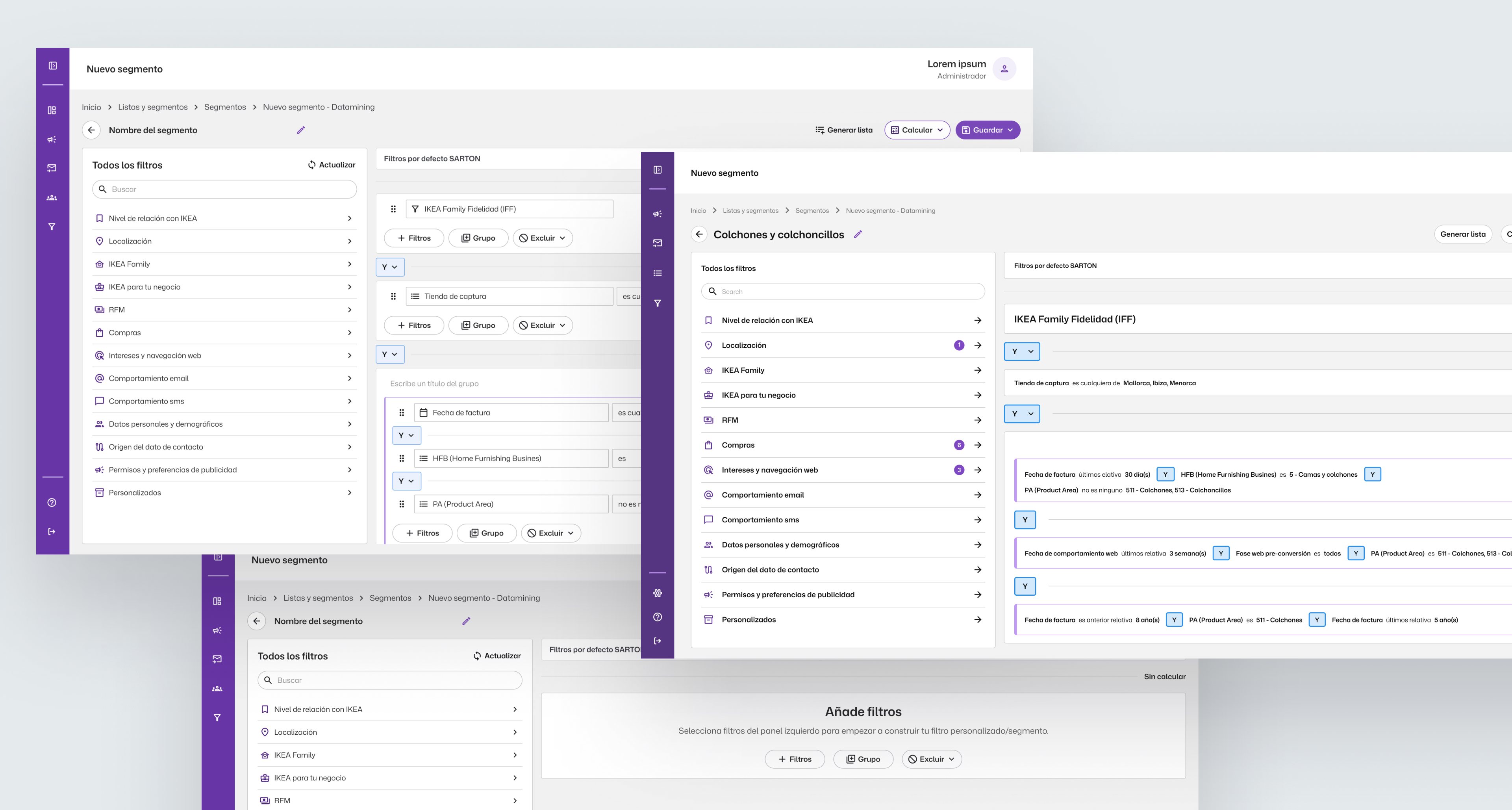
- Filters by data type.We designed logic capable of linking conditions for boolean, text, and number fields without hiding their complexity.
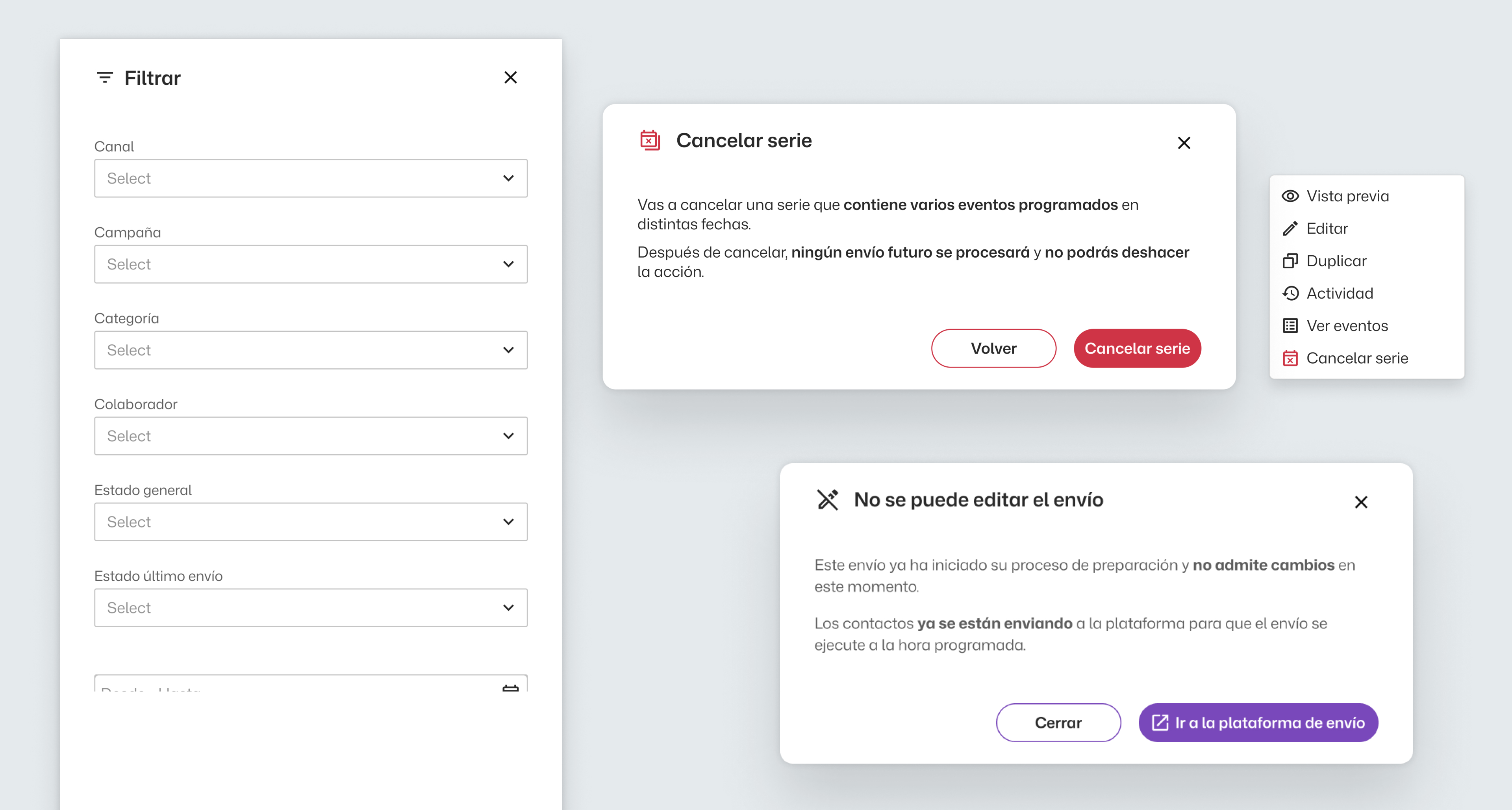
- Visible states.We prioritized making it clear what was happening at each step: loading, saving, sending, error, recovery, or cancellation of sensitive processes.
- Audience as feedback.The result of the filters was presented as a funnel to help users understand how each condition or group affected audience size.
Outcome & learnings
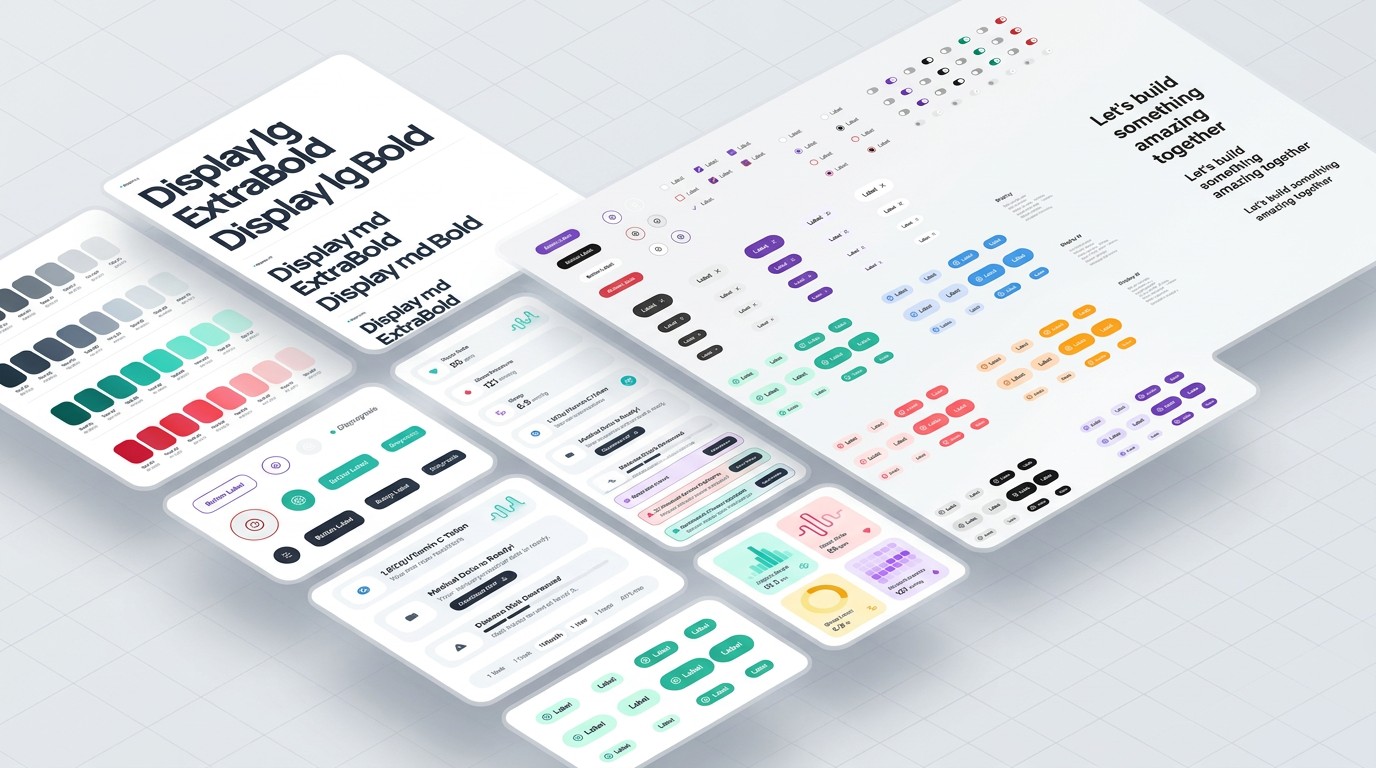
The new tool made it easier to understand and reuse segmentations through templates, with a more visual experience and a gentler learning curve. Applying Rita 2.0 helped give the CRM a more consistent and pleasant visual language.
The project reinforced a key idea: in complex tools, the interface should make the system’s logic visible — states, dependencies, and consequences — instead of forcing people to infer or manage it in external tools.
more projects

Go back
CRM Marketing
challenge
The existing segmenter hadn’t been updated in years. It was complex to learn, slow for certain actions, and didn’t always clearly show whether a process was loading, saved, or being applied correctly.
In addition, the team relied on Excel to manage specific data and calculations. The new CRM needed to centralize audience segmentation for campaigns and leave room for future metrics and reporting.
role
I participated as a Product Designer across the main phases: functional definition, benchmarking, flow and mockup design, iteration with stakeholders, and QA review.
I worked alongside another designer, stakeholders, and the CRM development team to balance business needs, user experience, and technical feasibility.
process
- We gathered requirements and validated the feasible functionalities for the first phase of the product.
- We analyzed patterns from tools like HubSpot and Salesforce to understand established segmentation logic.
- We designed and refined mockups with stakeholders and developers; in QA, we fixed issues and adapted components to API and database constraints.
key design decisions
- Filters by data type.We designed logic capable of linking conditions for boolean, text, and number fields without hiding their complexity.
- Visible states.We prioritized making it clear what was happening at each step: loading, saving, sending, error, recovery, or cancellation of sensitive processes.
- Audience as feedback.The result of the filters was presented as a funnel to help users understand how each condition or group affected audience size.
Outcome & learnings
The new tool made it easier to understand and reuse segmentations through templates, with a more visual experience and a gentler learning curve. Applying Rita 2.0 helped give the CRM a more consistent and pleasant visual language.
The project reinforced a key idea: in complex tools, the interface should make the system’s logic visible — states, dependencies, and consequences — instead of forcing people to infer or manage it in external tools.
more projects

Go back
CRM Marketing
challenge
The existing segmenter hadn’t been updated in years. It was complex to learn, slow for certain actions, and didn’t always clearly show whether a process was loading, saved, or being applied correctly.
In addition, the team relied on Excel to manage specific data and calculations. The new CRM needed to centralize audience segmentation for campaigns and leave room for future metrics and reporting.
role
I participated as a Product Designer across the main phases: functional definition, benchmarking, flow and mockup design, iteration with stakeholders, and QA review.
I worked alongside another designer, stakeholders, and the CRM development team to balance business needs, user experience, and technical feasibility.
process
- We gathered requirements and validated the feasible functionalities for the first phase of the product.
- We analyzed patterns from tools like HubSpot and Salesforce to understand established segmentation logic.
- We designed and refined mockups with stakeholders and developers; in QA, we fixed issues and adapted components to API and database constraints.
key design decisions
- Filters by data type.We designed logic capable of linking conditions for boolean, text, and number fields without hiding their complexity.
- Visible states.We prioritized making it clear what was happening at each step: loading, saving, sending, error, recovery, or cancellation of sensitive processes.
- Audience as feedback.The result of the filters was presented as a funnel to help users understand how each condition or group affected audience size.
Outcome & learnings
The new tool made it easier to understand and reuse segmentations through templates, with a more visual experience and a gentler learning curve. Applying Rita 2.0 helped give the CRM a more consistent and pleasant visual language.
The project reinforced a key idea: in complex tools, the interface should make the system’s logic visible — states, dependencies, and consequences — instead of forcing people to infer or manage it in external tools.
more projects